
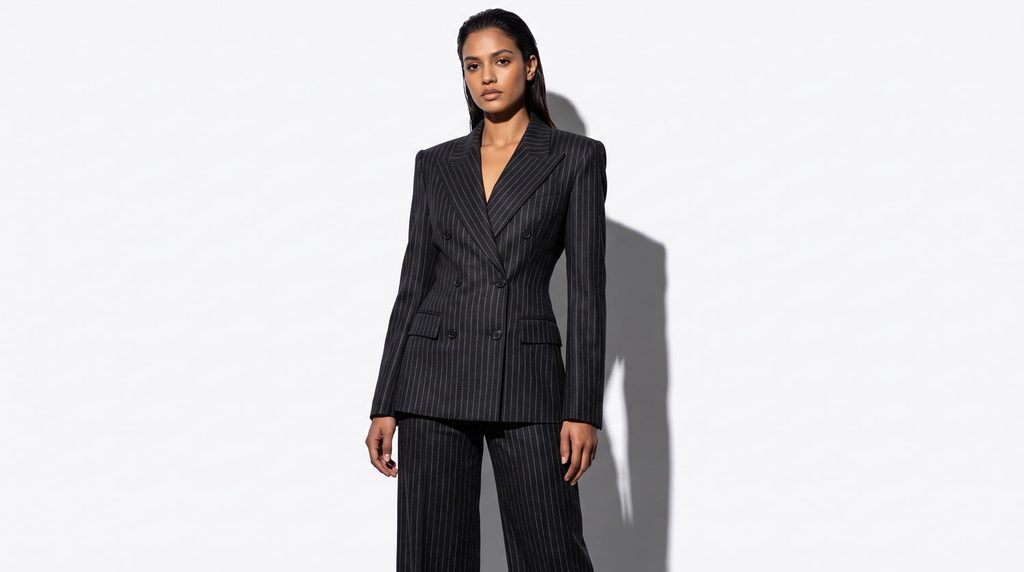
AI on-model fashion images have moved well past the experimental stage. Brands across the UK are using them in live catalogues, running them on paid channels, and in some cases replacing portions of their traditional shoot budgets with them. The results, when done properly, are genuinely hard to distinguish from photography. When done poorly, they undermine the product and the brand in ways that are difficult to recover from.
This post covers what AI on-model generation actually produces, where it holds up commercially, where it reliably fails, and how to decide whether it belongs in your visual content workflow.
What AI On-Model Fashion Images Actually Are
The term covers a few distinct approaches, and it matters which one you’re using.
The first is full model generation: an AI system creates both the model and the garment together from a text or image prompt. No real person is involved. The model’s appearance, pose, and expression are all synthetic.
The second is product placement: a real studio image of the garment (on a mannequin or laid flat) is used as a reference, and the AI generates a model wearing that specific item. This preserves far more product accuracy because the actual garment is the input, not a description of it.
The third is virtual try-on, where an existing model image is used as a base and the garment is digitally fitted to it. This is closest to traditional retouching and tends to produce the most controlled results.
Each approach has a different accuracy profile, a different failure mode, and a different compliance picture. Treating them as interchangeable is one of the most common mistakes we see brands make when they first evaluate this category.
Where AI On-Model Fashion Images Hold Up Commercially
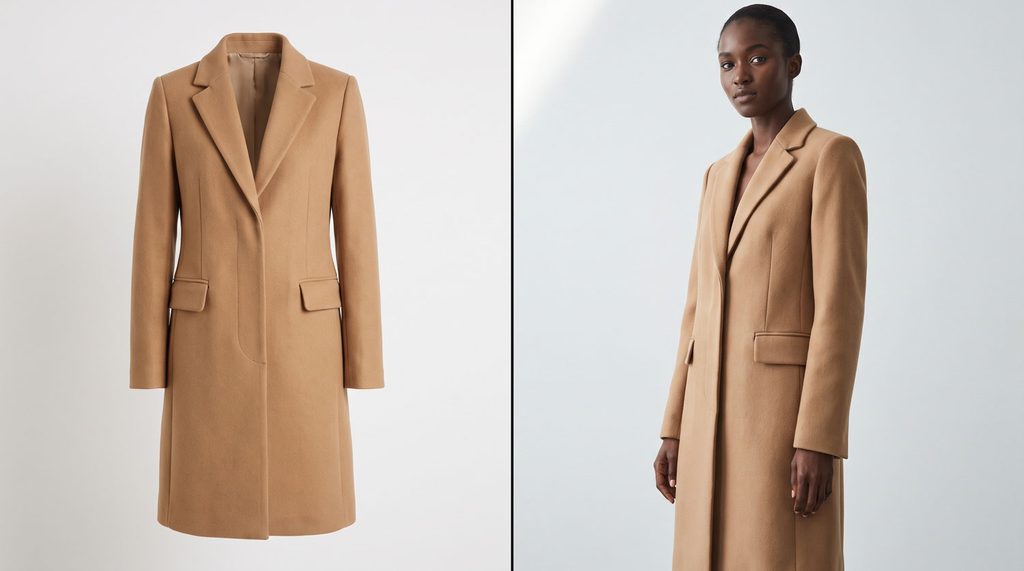
For certain product types and use cases, AI on-model fashion images are genuinely fit for purpose right now.
Structured garments perform well. Tailored blazers, outerwear, denim, knitwear with defined structure, and most woven fabrics render accurately enough for commercial use when the source image quality is good. The AI can replicate cut, proportion, and colour with consistency that rivals a mid-budget studio shoot.
Catalogue scale is where the economics become compelling. A brand with 400 SKUs and a limited shoot budget can use AI models to cover the volume that traditional photography cannot. This is particularly relevant for brands with seasonal ranges where speed matters as much as quality.
Diversity of representation is another genuine advantage. Generating a range of skin tones, body types, and ages from a single garment input is faster and cheaper with AI than coordinating multiple model bookings. When the outputs are reviewed and quality-controlled properly, this is one of the strongest arguments for the approach.
Secondary and supporting images also suit AI well. If your hero image remains a real photograph, AI on-model images for the secondary carousel, email campaigns, or social content carry less risk and add genuine value.
Where AI On-Model Fashion Images Fail Commercially
The failure modes for AI on-model fashion images are specific, and they are consistent across tools and brands. Understanding them before you commit saves significant rework later.
Drape and movement
Lightweight fabrics, silk, chiffon, bias-cut garments, and anything designed to move are where AI on-model generation most consistently falls short. The AI has no physical understanding of how fabric behaves under gravity or in motion. It generates a plausible-looking surface rather than an accurate representation of the garment. For fashion brands where drape is a core part of the product’s appeal, this is a serious commercial limitation, not a minor visual imperfection.
Texture at close range
At product detail level, AI-generated textures often smooth out or misrepresent what the material actually feels like. Knit structure, embroidery, lace, beading, leather grain, and technical fabrics (like Gore-Tex or performance mesh) are all vulnerable. When a customer zooms in on a product image and the texture doesn’t match what arrives, that’s a return and a lost repeat purchase.
Complex prints and patterns
Prints are one of the highest-risk areas. An AI system may retain the general tone of a print while distorting the detail, repeating elements incorrectly, or generating a plausible-looking pattern that doesn’t match the actual garment. For print-led brands, this is a near-certain problem without very careful quality review.
Fit accuracy at the edges
Collars, cuffs, waistbands, hemlines, and any structured edge are where fit inaccuracies tend to show. The AI interprets how a garment sits on a body based on training data, not on the actual garment construction. A shirt collar that sits slightly wrong, or a waistband that appears to float, reads as poor quality to a fashion-aware buyer even if they can’t articulate why.
Consistency across a range
Generating 40 SKUs from the same collection and achieving a consistent model appearance, lighting match, and background across all of them requires very careful workflow management. Without it, the range reads as patchwork rather than a coherent collection. This is a workflow and QA problem as much as a technical one, but it’s frequently underestimated.
The Representation Question
AI on-model fashion images raise genuine questions about diversity and representation that brands need to think through before they deploy at scale.
The training data behind most AI image models skews toward particular body types, skin tones, and facial features. Without active intervention in the generation process, the outputs tend to reflect those biases. Generating a diverse range of models requires deliberate prompting, careful review, and often significant iteration to get right.
There is also a broader question about authenticity. Some audiences respond positively to knowing a brand uses AI tools openly. Others find it alienating, particularly in fashion where aspiration and the sense of a real person wearing the product are part of what drives purchase. Neither response is universal, and the right answer depends on the brand, the audience, and how the images are used.
The EU AI Act (Article 50), which became enforceable on 2 August 2026, requires disclosure when AI is used to generate or manipulate images of people in certain commercial contexts. If your brand sells into European markets, this is a compliance consideration, not just an ethical one. The full text of the regulation is worth reading alongside your legal team’s guidance rather than relying on summaries.
Platform and Marketplace Compliance
Marketplaces and retail platforms are at different stages of developing explicit policies on AI-generated model imagery, and the picture is still evolving.
The general principle across most major platforms is that images must accurately represent the product being sold. An AI-generated model image that misrepresents the colour, fit, or material of a garment creates the same liability as a retouched photograph that does the same thing. The tool used to create the image is less relevant than whether the image is accurate.
Where platforms do have specific AI policies, they tend to focus on disclosure and accuracy rather than an outright ban on AI-generated content. The direction of travel is toward transparency, not prohibition. Brands that build disclosure into their workflow now are in a stronger position as policies formalise.
UK distance selling regulations also remain relevant regardless of which platform you sell through. Under the Consumer Contracts Regulations 2013, customers have the right to return goods that don’t match their description. An AI model image that inaccurately represents a garment’s drape, colour, or texture creates direct legal exposure, not just a customer service problem.
The Hybrid Approach: Why Most Serious Brands Use Both
The brands getting the most value from AI on-model images are not replacing their photography budgets wholesale. They are using AI models selectively, for specific use cases, within a workflow that still relies on real photography for the images that carry the most commercial weight.
A workable hybrid model typically looks like this: hero images and primary PDP shots are real photography, because these are the images that drive purchase decisions and need to be unambiguously accurate. Secondary images, lifestyle context, range shots, and campaign assets are where AI models take on the volume. This approach captures the efficiency gains without exposing the brand to the accuracy and compliance risks that come from going fully AI on hero content.
The other dimension is using AI models for speed, not cost alone. Getting new-season product online quickly, or testing how a garment reads in different contexts before committing to a full shoot, are legitimate uses that the hybrid model enables without requiring the entire catalogue to go AI-first. This is the same hybrid principle we set out in our complete guide to AI product photography in the UK, applied here specifically to fashion and on-model imagery.
We cover the broader principles of what AI can and can’t do for product images in more detail elsewhere, and much of it applies directly to fashion. The failure modes for garment photography are specific, but the underlying principles around input quality, QA process, and workflow design are consistent across product categories.
How to Brief an AI On-Model Workflow Properly
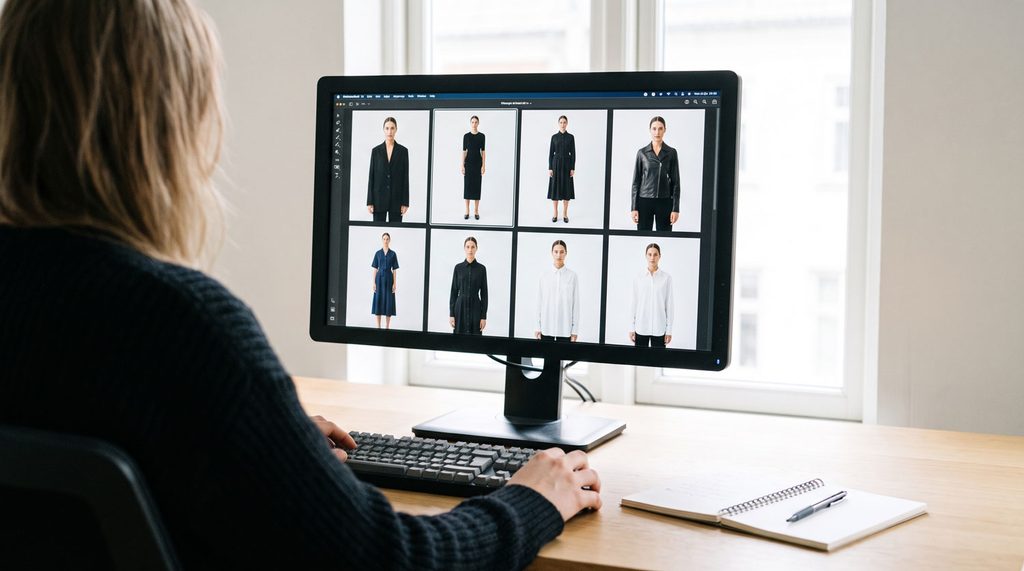
If you’re evaluating AI on-model images for your brand, the briefing process is where most projects either succeed or fail. The quality of what you put in determines the quality of what comes out, and “let’s see what it does” is not a brief.
A proper brief for AI on-model generation covers:
- Source image quality: the garment input needs to be clean, well-lit, and accurately coloured. A poor ghost mannequin image or a rushed flat lay will produce a poor AI output regardless of how good the generation tool is.
- Model specification: skin tone, approximate age range, body type, pose direction, and expression. The more specific the brief, the more consistent the outputs.
- Background and context: studio, lifestyle, or editorial. Each requires a different generation approach and has different consistency challenges at scale.
- QA criteria: what constitutes an acceptable output? Define this before generation, not after. Colour accuracy, garment edge accuracy, and texture fidelity should all have explicit pass/fail criteria.
- Consistency anchors: if you’re generating across a range, identify what needs to stay consistent (lighting direction, background tone, model appearance) and lock those parameters before scaling up.
The brands that get good results from AI on-model fashion images treat it as a production workflow with defined inputs and QA gates, not a creative experiment. The ones that struggle treat it as a shortcut and are surprised when the outputs require more rework than a traditional shoot would have taken.
If you’re not sure where your current visual content workflow stands in terms of AI readiness, a structured Visual Content Audit is the logical starting point. It maps what you have, identifies where AI on-model could add genuine value, and flags the compliance and accuracy risks before they become problems.
Is AI On-Model Right for Your Brand?
There is no universal answer, but there are clear signals that the approach is or isn’t a good fit at a given stage.
| Situation | AI on-model likely suitable | AI on-model not yet suitable |
| Garment type | Structured, woven, defined silhouette | Lightweight, draped, bias-cut, technical fabric |
| Volume | High SKU count, speed to market matters | Small range where every image is a hero shot |
| Image role | Secondary, lifestyle, campaign, email | Primary PDP, hero, main listing image |
| QA resource | Dedicated review process, defined criteria | No review process, outputs going live unreviewed |
| Compliance readiness | Disclosure approach defined, legal reviewed | No policy position, no review of platform rules |
For brands that fall into the right-hand column on most of these, the smarter move is to build the workflow foundations first. The tools are mature enough to deliver good results; the limiting factor in most cases is the process around them, not the technology itself. Understanding why AI product images fail commercially is worth reading before committing budget to any AI on-model project.
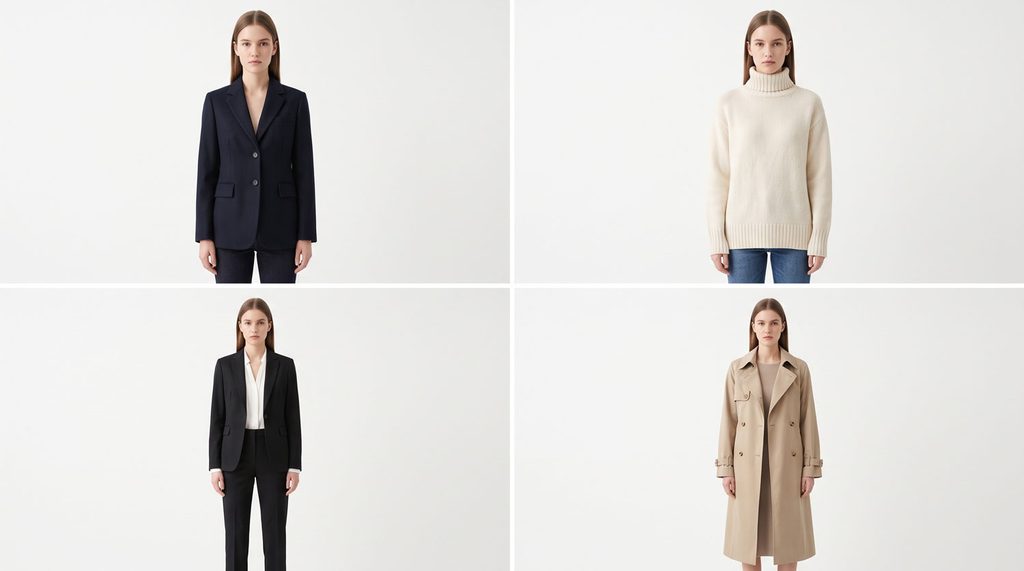
Work With Us
We work with fashion brands and creative agencies evaluating AI on-model imagery as part of a broader visual content strategy. If you want an honest assessment of whether your garment range and current workflow are ready for AI models, our Visual Content Audit covers exactly that. It maps your current imagery, benchmarks it against what AI on-model generation can realistically produce for your specific product types, and gives you a clear picture of where the opportunity is and where the risks are.
Find out more about the Visual Content Audit or get in touch to discuss your requirements directly.
Frequently Asked Questions
Are AI on-model fashion images legal to use in the UK?
There is no general prohibition on using AI-generated model images in UK commercial contexts. The relevant legal framework centres on accuracy and consumer protection: images must represent the product correctly, and the Consumer Contracts Regulations 2013 give customers the right to return goods that don’t match their description. The EU AI Act (Article 50) introduces disclosure requirements for AI-generated images of people in certain commercial contexts for brands selling into European markets, enforceable from August 2026. Brands should review their specific use case with legal counsel rather than relying on general guidance.
Will customers be able to tell the images are AI-generated?
For well-executed AI on-model images of structured garments, most consumers cannot reliably distinguish them from photography. Research from 2025 found that the majority of shoppers said real and AI product images looked the same or had only small differences. However, this applies to high-quality outputs reviewed through a proper QA process. Poor outputs, particularly on drape-heavy or texture-dependent garments, are frequently obvious to trained buyers and fashion-aware consumers.
How much do AI on-model images cost compared to traditional model photography?
The cost comparison depends heavily on volume and quality requirements. For high-SKU catalogues, AI on-model can significantly reduce per-image cost compared to traditional model bookings, studio hire, and post-production. For small ranges where every image is a primary PDP shot requiring high accuracy, the cost advantage narrows considerably because the QA and iteration required to get outputs right at that standard is substantial. A proper cost comparison needs to account for QA time, iteration rounds, and any rework, not just the generation cost.
Do we need to disclose that our model images are AI-generated?
The disclosure picture is evolving. The EU AI Act requires disclosure in certain contexts for brands selling into European markets. Individual platform policies vary and are still developing. The direction across both regulation and platform policy is toward transparency rather than prohibition. Brands that build a disclosure approach into their workflow now are better positioned as requirements formalise. What constitutes adequate disclosure in your specific context is a legal question, not just a marketing one.
Can AI on-model images work for plus-size or specialist fit ranges?
In principle, yes. AI generation can produce models across a wide range of body types, and this is one of the genuine advantages of the approach for brands with diverse fit ranges. In practice, achieving accurate garment fit representation across different body types requires careful briefing, significant iteration, and a rigorous QA process. The training data biases in most current models mean that non-standard body types often require more generation attempts to get right than the default outputs would suggest.
What source images do we need to get started with AI on-model generation?
The minimum viable input is a clean, well-lit image of the garment, either on a ghost mannequin or laid flat on a neutral background, with accurate colour and no distracting props or backgrounds. Better inputs produce better outputs. A properly shot ghost mannequin image from a controlled studio environment will consistently outperform a rushed flat lay or a garment photographed on a phone. The quality of your source imagery is the single biggest variable in the quality of your AI on-model outputs.

Dee Patel is an AI Visual Content Consultant and commercial product photographer with 14 years of experience. Dee advises UK e-commerce brands, retail businesses, and creative agencies on AI visual content strategy, production workflows, and cost efficiency. Based in the West Midlands.